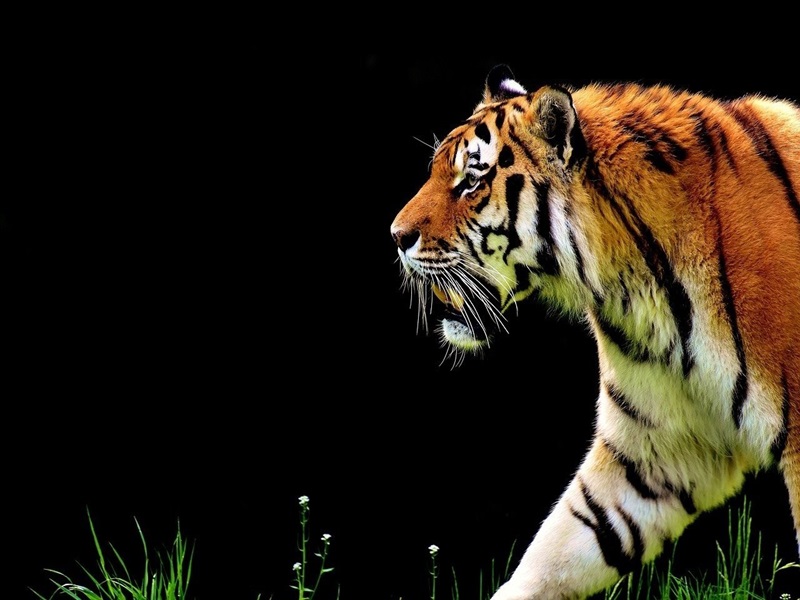
Ranthambore National Park, located in the Sawai Madhopur district of southeastern Rajasthan, is renowned as one of India’s premier tiger reserves, offering a unique opportunity to witness the majestic Bengal tigers in their natural habitat. Spanning approximately 392 square kilometers, this national park is a biodiversity hotspot that also holds historical significance due to the iconic 10th-century Ranthambore Fort. The park's diverse topography—ranging from dense forests and rugged cliffs to rocky outcrops and serene water bodies—creates an ideal environment for a wide variety of wildlife.
Ranthambore is celebrated for its population of Bengal tigers, which can often be seen prowling freely through the park. This makes it a prime destination for wildlife enthusiasts, photographers, and tourists seeking an unforgettable tiger safari experience. The park’s reputation as a leading tiger conservation site in India draws nature lovers from around the globe.
Beyond tigers, Ranthambore National Park is home to a myriad of wildlife species, including leopards, sloth bears, sambar deer, spotted deer, Indian gazelles, and wild boars. It also hosts over 300 bird species, making it a paradise for birdwatchers. The park’s intricate network of lakes and streams further supports this rich biodiversity, ensuring a thriving ecosystem. With its combination of thrilling wildlife encounters, historical landmarks, and scenic landscapes, Ranthambore National Park stands out as a must-visit destination for anyone exploring Rajasthan or seeking an authentic wildlife experience in India.
Ranthambore National Park offers safari experiences in two daily shifts: Morning and Afternoon. The timings of these safaris vary according to the changing seasons and are scheduled based on the park’s opening hours, which are influenced by sunrise and sunset. Below are the typical safari timings for different seasons:
| Month | Morning Shift | Afternoon Shift |
|---|---|---|
| 1st October to 31 October | 6.30 A.M. to 10.00 A.M | 2.30 P.M. to 6.00 P.M |
| 1 November to 31 January | 7.00 A.M. to 10.30 A.M | 2.00 P.M. to 05.30 P.M. |
| 1st february to 31 March | 6.30 A.M. to 10.00 A.M | 2.30 P.M. to 06.00 P.M. |
| 1 Aprail to 15 May | 6.00 A.M. to 09.30 A.M | 3.00 P.M. to 06.30 P.M. |
| 16 May to 30 June | 6.00 A.M. to 09.30 A.M | 3.30 P.M. to 07.00 P.M. |
Ranthambore National Park is well-connected to major cities across India, making it accessible by air, rail, and road. Whether you are traveling from Delhi, Mumbai, Jaipur, or other key locations, you can reach Ranthambore with ease and within a short time.
The nearest airport to Ranthambore National Park is Sanganer Airport in Jaipur, located approximately 180 kilometers away. It takes around 2 hours and 45 minutes to reach Ranthambore by road from Jaipur. This airport is well-connected to major Indian cities like New Delhi and Mumbai, with multiple daily flights operated by leading domestic airlines.
Ranthambore National Park is easily accessible by train via the Sawai Madhopur Railway Station, which is situated on the main railway line connecting Delhi and Mumbai. This station serves as a convenient hub, offering excellent connectivity to key cities like Jaipur, Delhi, and Mumbai.
Regular super-fast trains, such as Jan Shatabdi Express and Rajdhani Express, operate between these destinations, providing a comfortable and efficient travel experience.
Ranthambore is well-connected by road, making it easily accessible from major cities such as Jaipur, Agra, and Delhi. The town of Sawai Madhopur, the gateway to Ranthambore National Park, can be reached through a network of well-maintained national highways and the newly developed Delhi-Mumbai Expressway.
With smooth highways and efficient connectivity, traveling by road is a convenient option for visitors seeking to explore this renowned wildlife destination. Regular taxis and private vehicles are available for hire, ensuring a comfortable journey to the park.

The tiger territory within Ranthambore National Park is marked by a diverse range of ecosystems that support a thriving population of Bengal tigers. The park’s landscape comprises dense deciduous forests, open grasslands, rocky hills and a network of water bodies such as lakes, ponds, and streams. This variety of habitats provides ample resources for the tigers, enabling them to establish their territories and coexist harmoniously with other wildlife. The lush forests offer dense cover and prey, while the open grasslands are ideal for hunting and roaming. Rocky hills and steep cliffs serve as strategic vantage points for observing their surroundings, and the abundant water bodies provide a reliable source of water, especially during the dry season. This intricate mix of habitats makes Ranthambore an ideal environment for the tigers to flourish, contributing to the park’s reputation as one of India’s premier tiger reserves.
| Tiger Title | Zone |
|---|---|
| Sultana-T107 And Cubs ( F), T01 ( M), Noori T105 & Cub( F) | Zone 1 |
| Noori-T105 & Cubs( F), T 60 (F), T57 ( M), T 101 (M), Arrow Head T84 (F) , T119 (F) | Zone 2 |
| Riddhi-T124 (F) , T120 ( M) & Cubs, T 41 (F) | Zone 3 |
| Riddhi-T124 (F) , T120 ( M), T19 ( F), Shakti -T111 & Cubs, T 121(M), T 41 (F) | Zone 4 |
| T102 & Cubs , T 125(F), T41( F), And T 103 ( F) | Zone 5 |
| T34, T8 And 3 Cubs, T39 Noor & Cub , T58 ( M), T127 F | Zone 6 |
| T58 ( M), T61 ( F) | Zone 7 |
| T58 ( M), T61 ( F) | Zone 8 |
| T62 (M), T99 (F). T108 (M) | Zone 9 |
| T58 ( M), T34 ( M), T114 & Cubs ( F), T 99 & Cubs ( F) | Zone 10 |